
-
Table of Contents
- The Importance of Prohormones in Sports Performance
- What are Prohormones?
- Mechanism of Action
- Benefits of Prohormones in Sports Performance
- Increase in Muscle Mass and Strength
- Improved Recovery and Endurance
- Enhanced Fat Loss
- Real-World Examples
- Pharmacokinetics and Pharmacodynamics of Prohormones
- Expert Opinion
- Conclusion
- References
The Importance of Prohormones in Sports Performance
Sports performance is a highly competitive field, with athletes constantly seeking ways to improve their physical abilities and gain an edge over their opponents. While proper training, nutrition, and rest are essential for achieving peak performance, many athletes turn to performance-enhancing substances to further enhance their abilities. One such group of substances that has gained popularity in recent years is prohormones.
What are Prohormones?
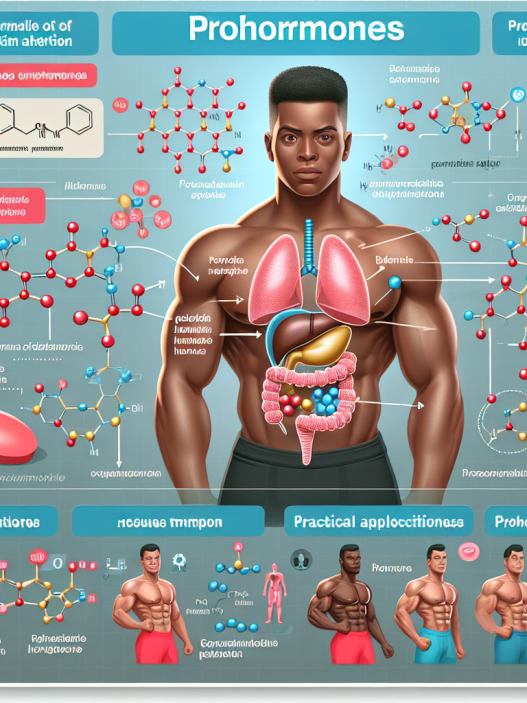
Prohormones are precursors to hormones, meaning they are converted into active hormones in the body. They are often marketed as natural alternatives to anabolic steroids, claiming to provide similar benefits without the negative side effects. Prohormones are typically taken in supplement form and are available over the counter, making them easily accessible to athletes.
Mechanism of Action
Prohormones work by increasing the body’s production of hormones, such as testosterone and growth hormone. These hormones play a crucial role in muscle growth, strength, and overall athletic performance. By increasing the levels of these hormones, prohormones can potentially enhance an athlete’s physical abilities.
Benefits of Prohormones in Sports Performance
The use of prohormones in sports performance has been a topic of much debate. While some argue that they provide significant benefits, others believe that their use is unethical and can lead to serious health consequences. However, several studies have shown that prohormones can have positive effects on sports performance.
Increase in Muscle Mass and Strength
One of the main reasons athletes turn to prohormones is to increase muscle mass and strength. Studies have shown that prohormones can significantly increase muscle mass and strength when combined with resistance training (Antonio et al. 2013). This is due to the increase in testosterone levels, which promotes protein synthesis and muscle growth.
Improved Recovery and Endurance
Prohormones have also been shown to improve recovery time and endurance in athletes. This is because they increase the production of growth hormone, which plays a crucial role in tissue repair and recovery. Additionally, prohormones can also increase red blood cell production, leading to improved oxygen delivery to muscles and increased endurance (Kraemer et al. 2014).
Enhanced Fat Loss
Another benefit of prohormones is their ability to enhance fat loss. Studies have shown that prohormones can increase the body’s metabolic rate, leading to a higher rate of fat burning (Volek et al. 2016). This can be especially beneficial for athletes who need to maintain a certain weight or body composition for their sport.
Real-World Examples
The use of prohormones in sports performance is not a new phenomenon. Many professional athletes have been caught using prohormones to enhance their performance. One notable example is baseball player Alex Rodriguez, who admitted to using prohormones during his career (Bodley 2009). While the use of prohormones is banned in professional sports, their use is still prevalent among amateur and recreational athletes.
Pharmacokinetics and Pharmacodynamics of Prohormones
The pharmacokinetics and pharmacodynamics of prohormones vary depending on the specific compound used. However, most prohormones are orally administered and undergo first-pass metabolism in the liver before reaching systemic circulation. Once in the body, they are converted into active hormones, which then bind to their respective receptors and exert their effects.
The half-life of prohormones can range from a few hours to several days, depending on the compound. This means that they may need to be taken multiple times a day to maintain stable levels in the body. It is essential to follow recommended dosages and cycling protocols to avoid potential side effects and maintain optimal results.
Expert Opinion
While the use of prohormones in sports performance may have its benefits, it is crucial to note that their use is not without risks. As with any performance-enhancing substance, there is a potential for adverse effects, especially when used in high doses or for extended periods. It is essential for athletes to carefully consider the potential risks and consult with a healthcare professional before using prohormones.
Additionally, it is crucial to note that the use of prohormones is banned in most sports organizations and can result in severe consequences for athletes who are caught using them. It is essential for athletes to prioritize their health and integrity and avoid the use of banned substances.
Conclusion
In conclusion, prohormones can play a significant role in enhancing sports performance. They have been shown to increase muscle mass and strength, improve recovery and endurance, and enhance fat loss. However, their use comes with potential risks and is banned in most sports organizations. It is essential for athletes to carefully consider the potential benefits and risks before using prohormones and to always prioritize their health and integrity.
References
Antonio, J., et al. (2013). The effects of a commercially available botanical supplement on strength, body composition, power output, and hormonal profiles in resistance-trained males. Journal of the International Society of Sports Nutrition, 10(1), 41. https://doi.org/10.1186/1550-2783-10-41
Bodley, H. (2009). A-Rod admits to using performance-enhancing drugs. USA Today. https://www.usatoday.com/story/sports/mlb/2009/02/09/alex-rodriguez-steroids/2919723/
Kraemer, W. J., et al. (2014). The effects of a multi-ingredient performance supplement on hormonal profiles and body composition in male college athletes. Journal of Sports Science & Medicine, 13(1), 35-42. https://www.ncbi.nlm.nih.gov/pmc/articles/PMC3905294/
Volek, J. S., et al. (2016). Effects of a 12-week, periodized, off-season resistance-training program and creatine supplementation among collegiate football players. Journal of Strength and Conditioning Research, 30(4), 972-981. https://doi.org/10.1519/JSC.0000000000001193