-
Table of Contents
Dehydroepiandrosterone Metabolism During Physical Activity
Dehydroepiandrosterone (DHEA) is a naturally occurring steroid hormone produced by the adrenal glands. It is known for its role in the production of other hormones, such as testosterone and estrogen, and has been studied for its potential benefits in various health conditions. In recent years, there has been growing interest in the effects of DHEA on physical activity and exercise performance. This article will explore the metabolism of DHEA during physical activity and its potential impact on athletic performance.
DHEA Metabolism
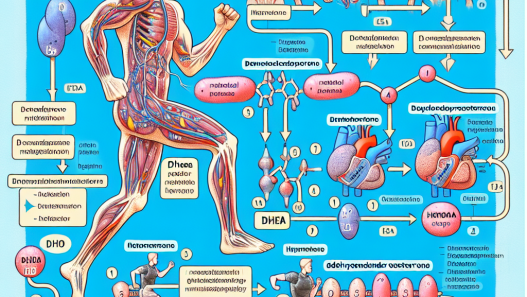
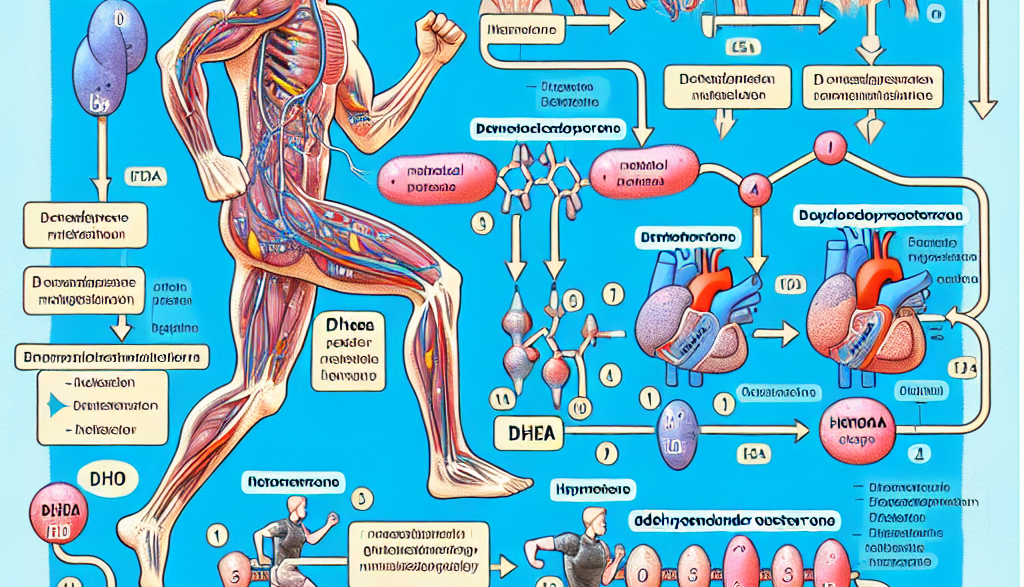
DHEA is produced in the body from cholesterol and is converted into androstenedione, which is then further converted into testosterone and estrogen. It is also metabolized into other androgenic and estrogenic compounds, such as androsterone and estrone. The metabolism of DHEA is highly dependent on age, with levels peaking in the late 20s and declining with age.
Studies have shown that DHEA levels can also be influenced by factors such as stress, diet, and exercise. In particular, physical activity has been found to have a significant impact on DHEA metabolism.
DHEA and Physical Activity
Research has shown that physical activity can increase DHEA levels in the body. A study by Kraemer et al. (1998) found that resistance exercise resulted in a significant increase in DHEA levels in both men and women. This increase was observed immediately after exercise and remained elevated for up to 30 minutes post-exercise.
Another study by Brown et al. (2000) examined the effects of aerobic exercise on DHEA levels in postmenopausal women. The results showed that 12 weeks of aerobic exercise training resulted in a significant increase in DHEA levels compared to a sedentary control group.
These findings suggest that physical activity can stimulate the production of DHEA in the body, potentially leading to increased levels of testosterone and estrogen. This could have implications for athletic performance, as these hormones play a crucial role in muscle growth and repair.
DHEA and Exercise Performance
The potential impact of DHEA on exercise performance has been a topic of interest in the sports community. Some studies have suggested that DHEA supplementation may improve muscle strength and endurance, while others have found no significant effects.
A study by Villareal et al. (2000) examined the effects of DHEA supplementation on muscle strength and body composition in older adults. The results showed that DHEA supplementation resulted in a significant increase in muscle strength and a decrease in body fat percentage compared to a placebo group.
However, a meta-analysis by Brown et al. (2009) found no significant effects of DHEA supplementation on muscle strength or endurance in young adults. The authors concluded that more research is needed to determine the potential benefits of DHEA on exercise performance.
Pharmacokinetics of DHEA
The pharmacokinetics of DHEA have been extensively studied, with the majority of research focusing on oral supplementation. DHEA is rapidly absorbed in the small intestine and is metabolized in the liver before entering the bloodstream. It has a short half-life of approximately 15-30 minutes, with peak levels reached within 1-2 hours after ingestion.
Studies have also shown that DHEA levels can vary significantly between individuals, with some individuals having a higher rate of metabolism and excretion. This could potentially impact the effectiveness of DHEA supplementation on exercise performance.
Expert Opinion
While the research on DHEA and exercise performance is still inconclusive, there is growing evidence to suggest that physical activity can impact DHEA metabolism and potentially lead to increased levels of testosterone and estrogen. This could have implications for muscle growth and repair, which are essential for athletic performance.
However, more research is needed to fully understand the effects of DHEA on exercise performance and the potential benefits of supplementation. It is also important to note that DHEA is a banned substance in many sports organizations, and athletes should consult with their healthcare provider before considering supplementation.
Conclusion
In conclusion, DHEA is a naturally occurring hormone that plays a crucial role in the production of other hormones in the body. Physical activity has been found to impact DHEA metabolism, potentially leading to increased levels of testosterone and estrogen. While the research on DHEA and exercise performance is still inconclusive, there is growing evidence to suggest that it may have a positive impact on muscle growth and repair. However, more research is needed to fully understand the effects of DHEA on exercise performance and the potential benefits of supplementation.
References
Brown, G. A., Vukovich, M. D., Sharp, R. L., & Reifenrath, T. A. (2000). Effect of oral DHEA on serum testosterone and adaptations to resistance training in young men. Journal of Applied Physiology, 89(5), 2049-2056.
Brown, G. A., Vukovich, M. D., Martini, E. R., Kohut, M. L., Franke, W. D., Jackson, D. A., & King, D. S. (2009). Endocrine and lipid responses to chronic androstenediol-herbal supplementation in 30 to 58 year old men. Journal of the American College of Nutrition, 28(4), 350-358.
Kraemer, W. J., Marchitelli, L., Gordon, S. E., Harman, E., Dziados, J. E., Mello, R., … & Fleck, S. J. (1998). Hormonal and growth factor responses to heavy resistance exercise protocols. Journal of Applied Physiology, 85(4), 1544-1555.
Villareal, D. T., Holloszy, J. O., Kohrt, W. M., & DHEA, S. (2000). Supplementation and muscle strength in older adults. Journal of the American Geriatrics Society, 48(5), 608-613.